Living paycheck to paycheck is not a lifestyle choice; it is a state of siege. The rent is due, the paycheck arrives, the money is gone, and the cycle repeats with no room for error. Nearly two-thirds of American households live this way at some point, and the advice they usually get, “just budget better,” misses the point: when there is no margin, a budget is a plan for spending money you do not have. Breaking the cycle takes a different sequence, and it starts with stopping the leaks, not with grand plans.
Step 1: Know Your Real Number
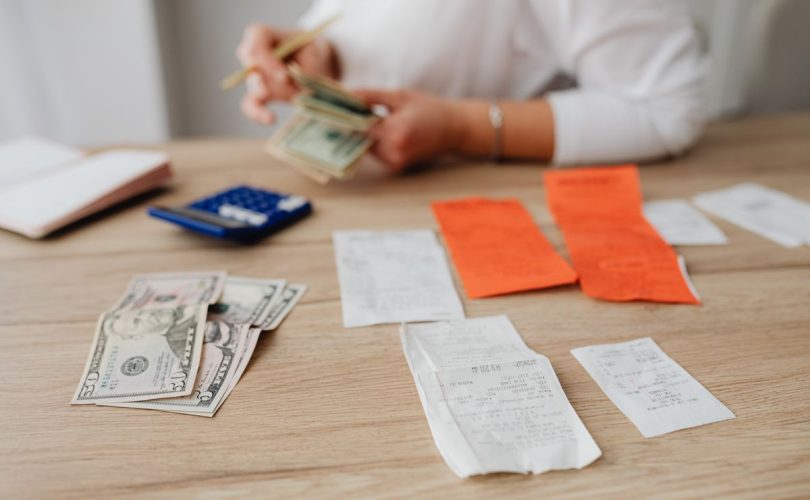
Before anything else, find out exactly where the money goes. Track every dollar for a month, not to judge yourself, but to see the truth. Most paycheck-to-paycheck households discover that the money is not disappearing into one big hole; it is leaking through a dozen small ones: subscriptions, convenience spending, interest and fees, and the “small” purchases that add up to hundreds a month.
Then calculate your true fixed costs, the rent, utilities, minimum payments, and groceries, and subtract them from your take-home pay. The remainder is your real disposable income, and the difference between that number and what you spend is the leak you can actually fix.

Step 2: Attack the Fees First
Fees are the most demoralizing kind of spending because they buy nothing. Overdraft fees, late fees, ATM fees, subscription fees, and interest on carried credit card balances can easily total $100 to $300 a month. Every one of them is stoppable. Switch to a bank with no overdraft and no ATM fees, or keep a $100 buffer so you never overdraft. Set up autopay or calendar reminders so bills are never late. Cancel the subscriptions you forgot. Transfer credit card balances to a 0 percent card or a debt management plan to stop the interest bleeding.
This step matters more than cutting coffee, because fees are pure loss, while coffee at least provides something. Eliminating $200 a month of fees is like getting a $2,400 raise, tax-free, and it is entirely within your control.
Step 3: Build the Smallest Cushion First
The psychological break comes from a buffer, and it does not need to be huge. A $500 starter fund changes the game: the car repair that used to mean a credit card, a payday loan, or a skipped bill becomes a withdrawal from the buffer, and the panic stops. Build it fast by redirecting every fee you eliminated and every windfall, tax refund, bonus, overtime, and side income, into a separate savings account.
Do not set the target at six months of expenses yet. That number is so far away it feels pointless. Win the $500, then the $1,000, then one month of expenses. Each milestone changes your relationship with money, because the fear that drives paycheck-to-paycheck living is not about the amount, it is about the absence of any margin at all.
Step 4: Increase the Gap, Not Just the Budget
Budgeting can only reallocate what comes in; the ceiling of the cycle is your income minus your fixed costs. Breaking the cycle permanently means working on both sides: reducing the fixed costs where possible, moving to a cheaper place, refinancing high-interest debt, negotiating bills, and increasing income through a raise, a promotion, a better job, or a side hustle. An extra $300 a month from any source is the same as cutting $300 of spending, and it is often easier to create.
Use the debt snowball or avalanche to kill the payments that keep your fixed costs high. Every debt you retire lowers your monthly floor, and the payment you were making gets redirected to the buffer, then to savings, then to retirement.
The Turnaround Is Real
Breaking the cycle is a sequence, not a single act: stop the leaks, kill the fees, build the buffer, grow the gap. Each step creates the margin the next step needs, and the process compounds. It is not fast, and it is not glamorous, but it is the difference between reacting to every financial surprise and absorbing them. The goal is not to become rich this month. It is to become the person who has a choice when life happens, and that person is built one fee killed, one buffer dollar, and one debt paid at a time.