Winter heating bills have a way of shocking even prepared households, and the shock is worse when energy prices climb. The good news is that heating your home is one of the most waste-prone systems in the house, and the fixes range from free to cheap. Most households can cut their heating costs by 20 to 30 percent with a weekend of work and a few permanent habits, without shivering through the season.
The Free Fixes First
Start with the fixes that cost nothing. Lower your thermostat a few degrees: each degree you drop the setpoint cuts heating energy use by about 1 percent, and sleeping under an extra blanket makes 68 degrees perfectly comfortable. Wear layers indoors, and stop heating rooms you do not use by closing their doors and vents.
Use the sun as a free heater. Open curtains on south-facing windows during the day to let sunlight warm the house, then close them at dusk to trap the heat. Reverse your ceiling fans to spin clockwise at low speed, which pushes warm air trapped at the ceiling back down to living level, an effect you can feel immediately.
Seal the Leaks: The Highest-Value Work
Air leaks are the biggest silent waste in most homes. The fix is cheap and permanent. Walk your home’s perimeter and feel for drafts around windows, doors, and outlets. Apply weatherstripping around movable parts and caulk around stationary gaps; a tube of caulk costs a few dollars and seals leaks that bleed warm air all winter. Install outlet gaskets behind switch plates, and add a door sweep if you can see light under exterior doors.
Do the match test: on a windy day, hold a lit incense stick near suspected leaks and watch the smoke. Every place the smoke blows sideways is a leak worth sealing. For a typical home, sealing leaks saves 10 to 20 percent on the heating bill, often more than any other single change.
The Programmable Thermostat
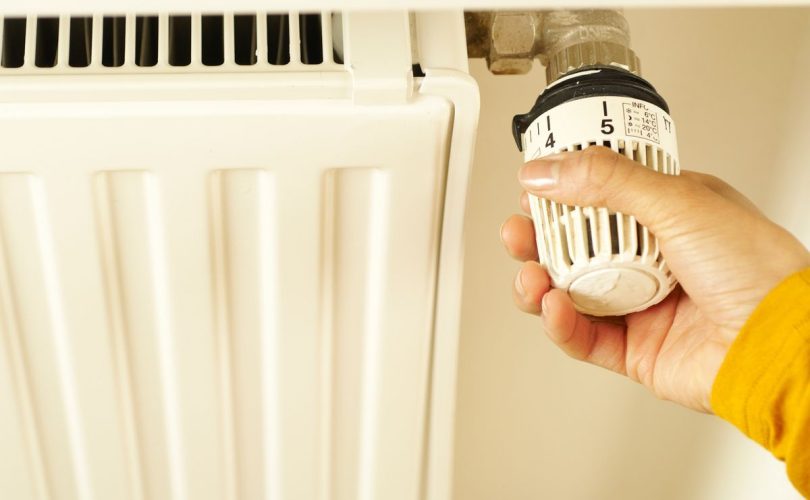
A programmable or smart thermostat pays for itself in one season. Set it to lower the temperature while you sleep and while the house is empty, then warm up before you wake or return. A schedule that drops the setpoint eight degrees for eight hours a day cuts heating use substantially, and you will not notice the difference because you are under blankets or out of the house.
Modern smart thermostats learn your schedule and let you adjust from your phone, which removes the excuse of forgetting. If you already have one, actually program it; a surprising number of households own a smart thermostat that runs on the factory schedule.
Maintenance and the Long Game
Your heating system rewards attention. Replace or clean the furnace filter monthly during the season, a clogged filter makes the system work harder and shortens its life. Have the system serviced annually, and consider a wintertime furnace tune-up, which catches small problems before they become expensive emergency repairs.
For homeowners, the bigger investments are worth modeling: adding attic insulation, sealing ductwork, and upgrading an old furnace can cut heating costs by 30 to 50 percent, and many utilities and governments offer rebates that cover a share of the cost. Even renting, you can request weatherstripping and draft fixes from the landlord; the request is cheap for them and valuable for you.
Winter heating does not have to be a budget emergency. Seal the leaks, program the thermostat, maintain the system, and dress for the season. The comfort stays, the bill drops, and the money you save is yours to keep.